
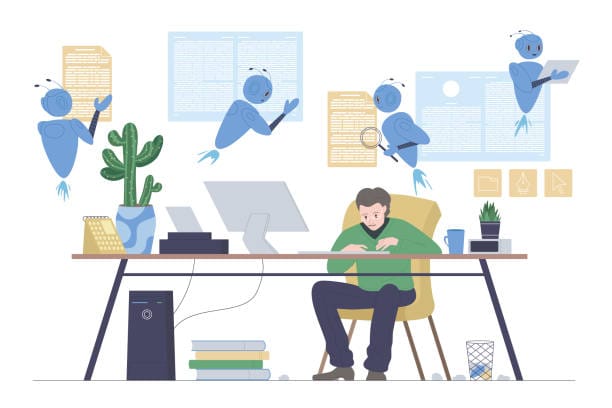
AI content writing tools for beginners, I can remember the first time I sat and stared at a blank Google Doc, with three articles to fill before the day was over, and I did not get a creative spark at all. It is that sinking feeling of every writer, marketer, and businessman: the blinking death cursor. A few years ago, the only alternative was to get more coffee and use brute force. That is all different nowadays. When you read this, you must have known about the hype surrounding AI content writing tools.
The query you might be asking yourself is whether they work or not, whether you rely on them as cheating, or, more realistically, which one you should start using in the first place. Over the last several years, I have tried nearly all the major platforms out there, from the primitive, clumsy ones to the surprisingly advanced ones we have today. I have brainstormed headlines with them, spent messy first drafts, and rewritten awkward emails. This is the plain and simple truth: AI will not steal your job. Nevertheless, it will be the best internship of your life, provided you understand what tool to pick and what pitfalls to avoid–and which tools are worth your time and money most of all.
The three major Categories of Beginners.
The number of choices is overwhelming when you are new to it. It can be used to categorize these tools into three groups: Chatbots, Marketers, and Polishers.
1. The Chatbots: The Swiss Army Knives.
Examples: ChatGPT (OpenAI), Claude (Anthropic), Gemini (Google)
Here is where you will find yourself as a novice. Why? The barriers to entry are low (sometimes free) and highly flexible.ChatGPT is the reflection of the industry. The free one is decent, and the paid one (GPT-4) is the place where magic is applied in the context of reasoning and nuance as a layperson would interpret it. I primarily use ChatGPT to generate ideas. In case I fall into a pit while writing a blog article on sustainable gardening, I will ask it to give me 10 different angles.
It generally gives me three bad ones, four mediocre ones, and three that yield a real idea. But lately it has been much for Cfor. In my case, Claude writes more conversational and less robotic immediately. Less inclined to use such AI peculiar forms as delve, tapestry, and landscape.More appropriate for brainstorming, outlining, summarising long articles, and sketch writing.
2. The Marketers: The Template Experts.
Examples: Jasper, Copy.ai, Rytr
These tools would be paint-by-numbers in case Chatbots are a blank canvas. There are applications like Jasper and Copy.ai that are designed to integrate with marketing workflows. Instead, they open forms where you enter your product name, a brief description, and the voice type. The tool then generates Instagram captions, Facebook ad headlines, and a meta description for search engines.
The first time I used Jasper (then called Jarvis) wasin n in its Boss Mod,e,, which displays a long-form document you can track. These applications may be helpful when a beginner operates a small business or a niche site, as they will find it easier to understand how marketing copy works than with a general-purpose chatbot. Best used: Social media posts, advertising copy, product descriptions, and mass-produced content.
3. The Polishers: The Editors
Examples: Grammatically, Hemingway, Wordtune.
Grammarly is an AI writing assistant you might not have considered. It applies AI to read between the lines. This is an amateur rescue net, which is why I rely on Wordtune. Wordt,,une how,e, ver does not correct your texts, but instead rewrites your sentence, en,ces similar to Grammarly, which corrects your errors.
When I write a clunky sentence (which is common), I highlight the sentence, press the button, nd it gives 10 variants that are more clearly expressed, with an edit looking over my shoulder.
Best on: non-native writers of English, sloppy drafts, and tone.
- The Elephant in the Room: The “Robotic” Tone.
- The novice’s most significant concern will be sounding like a machine.
- We’ve all read that content. It is dry and monotonous, with flawless grammar, yet it lacks soul. It lacks rhythm.
- This is the key to the practical usage of AI content generators: You have to be the pilot, not the passenger.
When you tell an AI to write you a 1,000-word article about training dogs, it will provide you with a generic, generic, and possibly hallucinated (made-up) article. It doesn’t know your dog. It is not aware of the anguish of a puppy chewing your favourite shoes.
How to fix this:
- Inject Personal Experience: Use AI on the skeleton; however, you have to add the meat. Write your own stories, idioms, and opinions.
- Sentence Length: AI is fond of medium-length sentences. Humans write in fragments. Our sentences are also long and winding, and they will take you on a journey. Mix it up.
- Fact Check Everything: There is no compromise on this. On one occasion, an AI tool assured me that a particular marketing law existed in 1995. It didn’t. AI tools are engines of prediction and not engines of truth. They make predictions of the probable word rather than the facts.
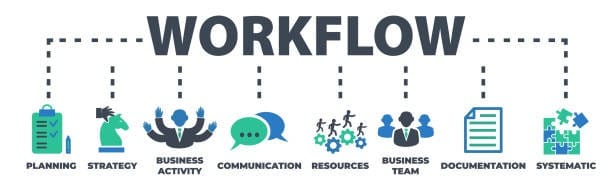
But what is the real trick of using these tools without losing your mind? The following is a basic workflow that I suggest beginners use to be able to blog or write articles:
Step 1: The Brain Dump (Human + AI)
Don’t ask the AI for a topic. Create a high-level concept tailored to your audience’s needs. Then tell the AI: I want to write about X. What are some of my counter-intuitive arguments? This will have you out of canned guidance.
Step 2: The Outline (AI)
Request that the tool generate an outline. Write a proposal for a blog post on X for a beginner audience. Talk encouragingly.
Review the outline. Erase the paragraphs that appear dull. Insert the gaps that you are familiar with.
Step 3: The Rough Draft (AI)
Create content bit by bit. Do not work out the entire thing at once; it is apt to lead to loss of track. Each header is a writing task.
Step 4: The Human Surgery (Human)
This is where the actual writing is done. Rewrite the introduction from start to finish; the AI text needs a human touch. Include specific examples in your life or research. Check all statistics.
Step 5: The Polish (AI)
Run the last piece of writing in Grammarly or Hemingway to find any passive voice or typing errors.
Price vs. Quality: How Much Should You Pay?
For a total beginner? Start for free.
There is no need for an $800/month Jasper subscription to understand how it works. One only needs the free version of ChatGPT or the free guidance from Claude to gain insight into prompt engineering (the art of conversing with the AI).
When you find yourself at a dead end, like you have to come up with more social media content or need to include more integration with SEO, then consider paid tools.
- Low Budget (0 -20/mo): ChatGPT Plus or Claude Pro. Incredible value.
- Mid Budget (30 -60/mo): Frase or Surfer SEO (in case you want to be ranked on Google).
- High Budget (100 and above /month): Enterprise marketing suites such as Jasper or Writer.com.
Google, SEO, and Ethics

The question most people ask me is: Will Google punish me for using AIGoogle’s formal position has changed; however, it is now concerned with quality rather than the production process. Google does not mind whether an AI has written the data when the information is helpful, trustworthy, and serves the user’s purpose, but is it going to write 100 AI-written articles a day, unedited, in search of simple traffic? Yes, you are likely to encounter a spam update.
I have also heard of sites that lost 90 per cent of their traffic in a single evening due to neglect of quality and quantity. The metric to monitor is EEAT (Experience, Expertise, Authoritativeness, Trustworthiness). AI cannot demonstrate Experience- it has not experienced. That’s your job. If a camera review, the AI will provide the camera’s specs, but you will need to tell us how it feels in your hand. That is what builds trust.
Final Verdict
The use of AI writing does not work as a magic wand. They are power drills. It can be ruined in the hands of a dilettante who doesn’t value the instrument built half the time by an artisan.
To amateurs, there is nothing to do but to play. Register a free ChatGPT or Claude account. I’m trying to write an email to a friend. Try to write a recipe. Grasping the areas of strength and weakness of the AI. The AI vs. Humans is not the future of writing. It is not humans who do not use AI; rather, it is the other way around.
FAQs
Q: Is it possible to use AI writing tools for free?
A: Yes. All popular tools, such as ChatGPT, Claude, and Copy.ai, offer free versions. They are usually restricted by the number of words that you can produce or apply to a bit older models, but they are perfect to learn.
Q: Are AI Detectors able to detect AI content?
A: Yes, sometimes; however, AI detectors are notoriously untrustworthy. They easily completely mislabel human writing as AI and vice versa. It is not about detectors, but rather the human-like sound of the content, which should be achieved through heavy editing and personal comments.
Q: What is the best tool to use in long blog posts?
A: Claude (due to its large context window and natural sound) or Jasper (due to its features of a long-form editor) are usually the best options to choose in 2024, in the case of long-form content.
Q: Should I give credit to AI if I write with its help?
A: It depends on the context. In the case of general blog posts or marketing copy, there is no tradition of attributing the AI. Nevertheless, when it comes to publishing academic work, journalism or placing your work in a publication with a heavy hand, you need to refer to the disclosure policies of the publication.
Q: Is it possible to substitute a human copywriter with AI?
A: It can fill the place of a poor copywriter. Nonetheless, it cannot substitute for high-level strategy, emotional empathy, face-to-face interviews, or exclusive creative angles. It is a multiplier of productivity and not a substitute.