
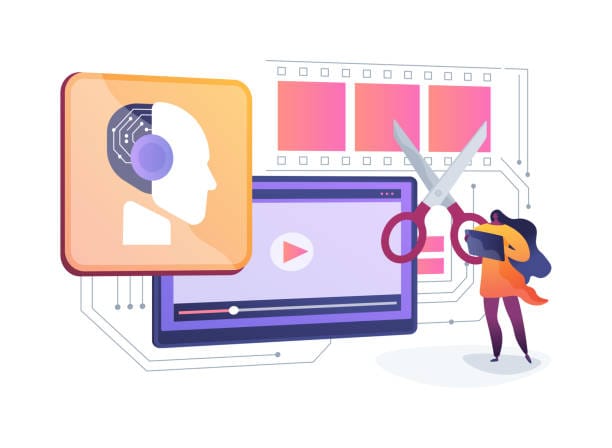
How to create faceless videos using AI, A couple of years back, to create a serious YouTube channel or create a video marketing strategy, the barrier to entry was physical. It required a good camera, a light set that didn’t make you look like a hostage, and, what is most frightening of all, the nerve to look into a lens and talk.
The first vlog I did was in 2016. I spent three hours arranging the lights, then edited it only to notice I had a piece of spinach in my teeth and that I cracked my voice whenever I got excited.
Jump up to the present, and the scene has changed into a bloody mess. The most lucrative, retention-based online channels are entirely faceless, from true crime to meditation to financial news and history. The creator is invisible.
However, this is the truth check most get-rich-quick gurus won’t tell you: with AI democratizing tools, the taste has not been automated. Anyone can make a faceless video; it is a craft to make a good one.
I have tested this workflow over the past 18 months as I transitioned to an all-AI stack, eliminating the need for manual stock-footage compilation. Here is the ground-level, shoes-on-the-ground analysis of how to build a faceless video presence that actually reaches human beings.
Phase 1: The Strategy (Do not omit this)
Before creating a single picture or voice line, you need to know the Value Delta.
In a personality-based video, the creator’s charisma will forgive many sins. In a faceless video, the information, pacing, and visual narration have to be more intimate, since you do not have a human face to draw the viewer’s attention.
Choose a High-Visual Niche
AI excels at the abstract. Niche topics such as History, Future Tech, True Crime, Psychology, and Horror stories are very effective because they are atmosphere-driven. Attempting a tutorial on how to fix a sink using AI-generated visuals is a nightmare, since AI has not yet mastered the mechanical continuity required. Stick with storytelling niches.
Phase 2: There is a Script, The Skeleton.
It goes without saying that you should not copy-paste pure AI text to a video.
Those video remarks we have heard. They are as though a college essay read by a GPS. In any other sentence, they employ such words as further, furthermore, and delve.
Write about your structure and use Large Language Models (LLMs) to brainstorm hooks. Request “10 examples of the definition of quantum computing.” But when you have the draft, you must operate on it as a human being.
My editing checklist:

Read it aloud. When you are out of breath, you have a really long sentence.
Inject colloquialisms. Change. You must look at. Here’s what you need to look at.
Visual Cues. In the same paragraph of your script document, you will need to write [ Visual: Dark forest, misty]. You may have to write to the eye, rather than to the ear.
Phase 3: The Voice (Crossing the Uncanny Valley).
These days, Microsoft Sam’s robotic voice is long gone. It is now the era of hyper-realistic generative voice synthesis.
But simply putting your script into a Text-to-Speech (TTS) engine isn’t that straightforward. Inflection is the distinction between a spammy video and a documentary-level production.
When using the highest-quality voice AI services (such as ElevenLabs or similar), prioritize stability and clarity.
High Stability renders the voice steady and very monotonous (good in news).
Low Stability causes breathiness, a few cracks, and emotional fluctuations (good for telling stories).
- Pro Tip: In case the AI focuses on the wrong word, put either quotation marks or bold text in the prompt and make the AI punch that particular word. It is an additional ten minutes, but the retention is multiplied manyfold.
- Phase 4: The Visuals (The “B-Roll” Probability)
It is at this stage that most people get trapped. There are two approaches here, and I suggest a middle course.
Path A: The Generative Research Path.
Creating specific scenes can be done with tools like Midjourney or Runway. The benefit is originality — you are not buying stock footage of everybody.
- The Struggle: Consistency. When you make one detective in a trench coat in scene 1, scene 2 could come up with a completely different-looking detective.
- The Solution: Image-to-video utilities. Create a consistent still image and apply motion effects, such as camera pans, blinking, or environmental motion (rain, fog). There is no need for full animation; just the Ken Burns effect on steroids.
Path B: The Stock Footage Route.
Generative AI can be excessively trippy in the financial or business niches. Here, apply stock footage aggregators.
The Workflow: It is not a drag-and-drop. Color-match the clips so they appear to be in the same universe. When one clip is cool blue, and the other is warm yellow, it is shocking. Apply a uniform adjustment layer on top of it.
Phase 5: The Sound and Edit Design.
This is the secret sauce. The script and voice are excellent; however, with flat editing, your video is dead.
The pacing principle: In a faceless video, the image must shift or move after every 3 to 5 seconds. This does not imply a sharp cut; it may be a zoom, text overlay, or transition.
Sound Design (The Subconscious Hook).
There is no face to look at, so the ear serves two masters.
- Background Music: It should rise during the emotional climax and fade completely to stress a point.
- Sound Effects (SFX): Invent one and add the sound of a ticking clock. In case you take a transition, include a “woosh.” It is a trifle, but such micro-sounds make the brain think the video is of high production.
Elephant in the Room: Platform Policy and Ethics.
We have to talk about trust. Social media, such as YouTube, are penalizing so-called low-effort or repeat content. They are also demanding that creators identify synthetically created content.
Do not hide it. Be transparent.
You will be flagged as spam if you post 10 videos in a day using fully automated pipelines. The algorithm is innovative.
But when you apply AI as an instrument, as a painter uses a brush, to produce quality, researched, and entertaining documentaries, then you have nothing to worry about. The site focuses on Watch Time and User Satisfaction. When people like what you create, the algorithm won’t care whether the images were made with a graphics card or a Canon DSLR.
Last Reflections: The Human Factor.
It is paradoxical, however, that the most human-looking AI videos are the best.
Artificial intelligence is but the hammer; you are the anvil. You do give the flavor, the time, the comedy, the sympathy. I have seen channels with awful AI-generated images go viral because of their phenomenal storytelling. I have also observed technically flawless 4K AI videos that failed because the scripts were soulless.
Start simple. Make a one-minute short. Become familiar with the prompt-to-image and text-to-audio workflows. When you have the stack in your grasp, you will understand that being faceless does not mean being identity-less. A brand is built on its ideas, not just its look.
Frequently Asked Questions
Q: Is it possible to monetize a faceless channel with the help of AI voiceovers?
A: Yes, absolutely. YouTube also monetizes channels using AI-generated voiceovers (TTS) when the content is unique. Nevertheless, if the content is considered either repetitive or simply programmatic (you have nothing to edit and can read one of the Reddit threads), you will not be able to remain in the Partner Program. Quality is the key.
Q: What is the cost of the start-up?
A: It will be free with trial versions of software, but a decent workflow will require a budget of approximately 50-80/month. This typically includes a mid-priced subscription to an image generator (such as Midjourney), a high-quality voice synthesizer (such as ElevenLabs), and editing software.
Question: What is the time spent on creating one video?
A: A 10-minute video may take between 10 and 15 hours when you are learning. When you are dialed in on your presets, templates, and workflow, you can narrow that down to 3 to 5 hours per video.
P: Do I require an intense computer?
A: Not necessarily. Most contemporary AI applications are cloud-based (browser-based). You will, however, need a reasonable amount of RAM (16 GB+) to run video-editing software and render final clips without hitches.
Q: What happens with AI image copyright?
A: This is a grey area and depends on the country. The US is now such that raw AI-generated images are not eligible for copyright protection. Nonetheless, on a paid platform, you usually have the commercial right to use the images that you create. Never fail to verify the specific Terms of Service of the AI tool that you are using.