
How to edit pictures online with A, I remember that it was so much time in Photoshop when I was trying to eliminate a tourist in my vacation photos. What used to take 45 minutes of agonizing clone-stamping can now be done in several seconds.The photo editing world has been redefining significantly over the past few years. There has come a use of online AI-driven editing tools, both on a professional level (a photographer wanting to workflow smoothly) and on the consumer level (a person wanting to make his or her Instagram pictures better).
Understanding the Truth Blunt of AI Photo Editing.
Before approaching the how-to, it is always a good idea to know something more about what is going on behind the scenes. These applications are image-processing software which running some trained algorithms to detect patterns, objects and faces and surroundings.
Imagine you have a thousand professional retouchers as a teacher. Not only automated but intelligent automation, they are able to detect skin color, lighting and when a photo is wrong. The software possesses contextual knowledge. It knows deliberate artistic incomprehensibility and a unintentional absence of concentration.
Saying hello to Image online photograph editors.
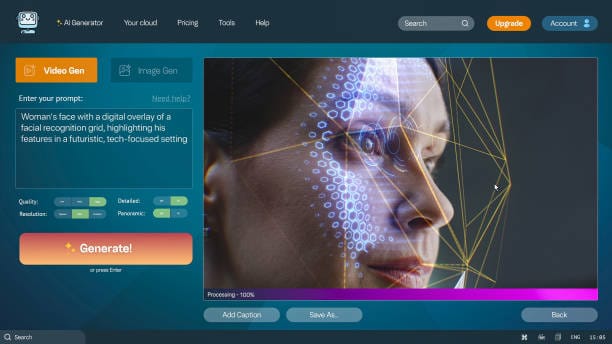
Online applications are beautiful because they are accessible. No download, no subscription costs on their basic functionality and it can be used on virtually any device with a net connection.
My typical workflow, which is most commonly applied to the editing of photos on the internet, includes the following:
Step 1: Choose Your Platform
I have been dependent on different avenues. The Canva has also incorporated impressive AI features to an already user-friendly interface. Fotor possesses decent enhancements.
More advanced controls are also provided in Pixlr, which are used by those who need to do more detailed controllers. Want one-click fixes? Canva works great. Need more creative control? Better options may be Pixlr or Photopea.
Step 2: Upload Your Image
Majority of the platforms accept JPEG, PNG, and RAW. This also contains a caution, but do not lose your original file. And I had this lesson the hard way when I saved more than a wedding picture, and I was unable to duplicate it.
Print out something significant.You have chosen the photo now you are ready to send it to the AI to be analyzed. It is automatically improved by some tools one can choose after upload. It will have auto-enhance, portrait healing, color fix, or sky reminder.
Step 4: Apply and Adjust
This is at this point most people fail. They accept AI preliminary suggestion literally. Such utilities have sliders and other types of adjustment controls since they are not in vain.In case the automatic enhancement fills the colours, weaken it. On the other hand, should the smoothing of the portrait be too unnatural, reduce it until it appears natural.
Practical and Prefacers Evaluations in the Real World.
Give me a chance to provide some real-life instances of the use of online AI editing magnificently:
Background Removal
This would have been a talent consuming much time. In the modern day, it can be done fast using websites like Remove.bg or the background remover of Canva. I was recently working with a friend and got her professional headshots done by LinkedIn where we photographed her on a cluttered wall in a home office and clean it up to a clean gradient.
Portrait Retouching
The skin smoothing and disappearance of blemishes take place almost immediately, as well as elimination of facial features. The key is restraint. Slide a slider beyond 50 and faces start to look like forms of wax.
Color Enhancement
Dumb vacation shots are turned into intelligent and even smart color applications. The AI can infer that you are going to the beach and have to enjoy a sunset, which it provides. In this way I have saved a great deal of feeble-looking interiors.
Object Removal
That commuter and you in your well-considered work? Gone. Litter signs of the street that litter your landscape? Removed. They are tools that offer convincing regeneration derived on the neighboring pixels and received designs.
Advice of a Person who has Made a Lot of Bad Choices.
Perusing through thousands of photographs on the same with such editing tools I have learnt some few things which are worth sharing and these are:Don’t over-process.
The biggest error is over loading the effects. Each adjustment compounds. What is initially a slight improvement, quickly becomes a cartoon.Check at full resolution. Any things and strange blending generally be left in shadow till the moment you zoom in, never agree to a contract unless you have gone through it. Work on copies. I have mentioned this, but this is worth repeating.
The creativity destruction of originals is heartbreaking.Get more out of your platform. The way in which a picture is needed to be printed must differ with the one needed to be posted on a social network. It is reliant on resolution, color profile and compression.
Limitations Worth Knowing
Tom, will I explain to you what these tools fail to do well – yet?
Even complicated scenes with the complex details still puzzle object-removal algorithms. Things have gotten better with hair masking, but it is not flawless yet, particularly with the fine strands on a busy background.Even creative editing is not possible in the absence of human judgment.
Artificial intelligence may be employed to optimize but it can never establish whether or not your image is supposed to be nostalgic, sad, or bright.And privacy issues. It is better to read Terms of Service and then to post photos online. Other websites get the right to the pictures or they train their systems using the pictures.
Final Thoughts
Personally I am very excited about democratization of high quality photo editing which now can be applied by professionals. The tools, those tools that have required many years of practice, have now been superseded by the intuitive interfaces that anybody can use.But tools they still remain.
By the way, one has to know light, composition and story telling. AI editing enhances the quality of photos – it can hardly transform a photo that has significant defects into a good one.Gets to work.
These sites have a free level, which is adequate in learning. Get preferences, error and contrast preferences. Your eye will need time until you see that difference when entering the world of editing and you will be able to move the sliders manually or the algorithms can move it.
Frequently Asked Questions
Is AI photo editing free?
Majority of the sites have at least a free tier. High-quality exports or high-resolution exports, or batch processing, may come at a costly subscription of a paid subscription of $ 5- $ 15 per month.
Would my AI midwifery reduce the quality of photos I make?
Quality loss will be conditional upon the settings and platform. Being the most reputable ones, they maintain the original resolution whenever storing in lossless modes like PNG.
Can AI fix blurry photos?
AI sharpening eliminates mild softness and it is difficult to create an image with intense motion blur and still be completely out of focus. Results vary significantly.
Is the photo which I post personal?
All platforms have different privacy policies. Read the terms of use, not everything keeps the right of use and imprints the pictures when they are processed.
Which is the best online photo editor using AI by beginners?
Canva boasts of the least threatening learning curve and control ease. Fotor is also easy to use and it is suitable to be improved easily.
Can photos that have been altered through AI be used in business?
Yes, as a rule, so long as you are permitted an original image. However, ensure that one verifies the terms of use of each platform prior to commercial use.