
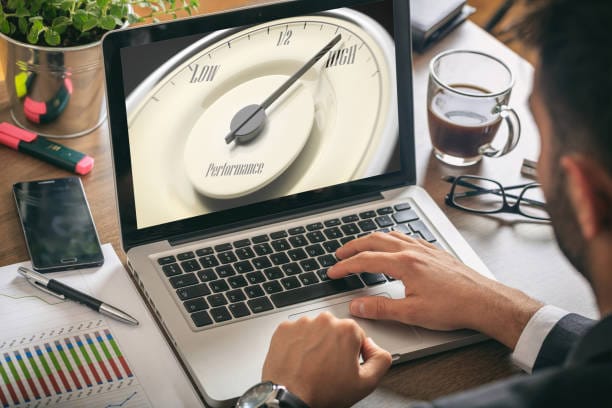
How to Fix Slow Laptop Performance, Being a person who has spent years fiddling with laptops- either in a job or as a hobby- I feel the frustration of the slowing down of the machine that was fast just a day ago. Imagine this scenario: You are in the middle of a task, and it is a deadline, and your laptop will take forever to open a single email or even freezes when you are on a video call. It has occurred to me more than I would like to acknowledge, be it the process of trying to push a tired-out workhorse of a Dell to its breaking point in college or assisting my friends in getting their slow MacBooks going again.
With years of experience, I have known that slow performance in a laptop is not a simple nuisance, but can be as a result of software bloat, hardware wear and even background process maliciousness. I will use my practical experience, on-the-job repairs, and tips and tricks shared in this article so that you can troubleshoot and fix these problems. We will discuss the quick fixes and more complex ones equally so that it does not get too cumbersome or unrealistic since not every fix will solve every laptop and I will mention the limits as we go.
The possible reasons why your laptop is slowing down.
It would be worthwhile to know what is making the system slow before we start fixing it. Laptops do not last forever they wear and tear and just like the old car, they require a tune-up. In my experience, the offenders usually fit into some major categories. Let’s break this down.
To start with, there are hardware limitations. When you have a laptop that is a few years away to its expiry, then it could be using an older processor, or a hard disk drive (HDD) that has been slowened down to a crawl by mechanical components. I recall that I switched an HDD to a solid-state drive (SSD) by myself on my own laptop- it was a night and day. Boot times suddenly reduced to more than a minute to only a few seconds. The trick though is that not every person can afford to upgrade, and with the RAM of the laptop being full (perhaps, only 4GB by 2024), even the simplest activities such as browsing more than one tab may become painfully slow.
And there is software overload. We install programs, update, and leave temporary files in our computers without considering the second thought. Viruses or malware will also creep in unless you are vigilant when downloading or when receiving email attachments. I had once assisted a colleague who had a laptop infected with adware; the machine was having dozens of background processes which made everything to crawl like molasses. A 2023 report by cybersecurity firm Avast said that malware infection has increased by 20% over the last year, and in many cases, it affects outdated devices.
How to Improve the Performance of a Laptop in 10 Easy Steps.
Ok now we can get down to business. Depending on my experience and what I have acquired in technology-related forums such as Reddit and official manuals provided by manufacturers, the following is the way to address slow performance. I will make this practical, using real-life examples and therefore note any possible dangers or ethical concerns along the way.
Get Things Going: Clean and Re-Boot.
How many times a re-boot will take care of it. It is as though you have taken your laptop outdoors and given it a breath of air. In my personal habit I would always restart my day, particularly after overuse. But in case your laptop remains slow, the following steps should be attempted:
Unnecessary startup programs: Use your Task Manager (on Windows) or Activity monitor (on Mac) and make sure that you turn off applications that start with your system. An example that I can recall is when I discovered an antivirus trial I had previously forgotten running on a friend of mine, which consumed considerable memory that released a lot of bandwidth after it was removed.
Empty the temporary files and cache: Open free software, such as the Disk Cleanup in Windows or the Storage Management in MacOS. I was assisting a client in one instance to recover 20GB of space by deleting the old system files and this immediately increased responsiveness.
It is a non-invasive model with a low risk and ethics- it is just about ensuring that you are not altering your device. Be careful though not to delete valuable files; always repeat.
Manage Software and Updates
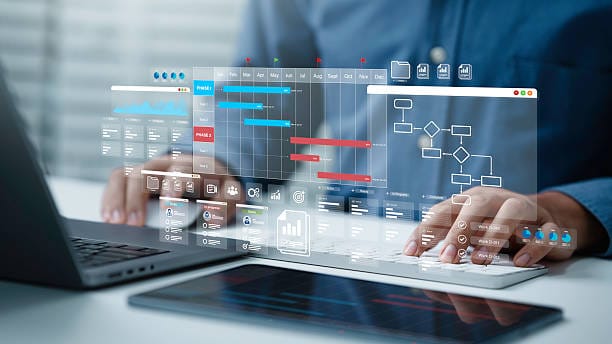
The usual opponent is software bloat. I have spent the years of my troubleshooting and updating your OS and drivers is the initial step of defense.
Update on the run system: On windows, go to settings update and security. For Macs, check the App Store. I remember that once I did an update of drivers with my graphics card, the freezing problem in my editing of videos was solved. However, it is always worth keeping in mind that updates are not infallible, and in some cases, they cause certain bugs, as was the case with recent Windows 11 updates that drained battery of some users.
Uninstall unnecessary software: Clean up the programs installed and get rid of the rubbish. Such tools as CCleaner (but must be used carefully, as it may occasionally be removing something useful) or the native uninstaller can assist. On the ethical side, do not use the pirated software since it not only slows down but may also cause malwares to be installed.
A real-life case: I have dealt with a small business owner who had sluggish accounting software on his laptop. Its updating not only accelerated things but also increased its compatibility with cloud services. The limitation? In case the laptop is quite old, you may not even get some updates and have no choice but to be stuck.
Effort towards Hardware Optimization.
When software customization is not good enough, go under the hood. Hardware mods are not a new thing to me, although I never compromise on safety.
- Add RAM or upgrade to an SSD: Seeing as it is possible in some cases, adding more RAM is a game changer (e.g., 8GB to 16GB) when it comes to multitasking. I have done this myself with a cheaper Acer and it is much more competent with graphic design software. Another win is the SSDs, which are faster than the HDDs and are more reliable. A 2024 Backblaze study pointed out the fact that failure rates in SSD are less, thus it is a savvy, ethical upgrade.
- House the heat and dust: Turn on a cooling pad or blow off the vents. I have witnessed overheating of laptops in hot offices which causes thermal throttling. One anecdote: The gaming laptop of one of my colleagues was slowing down during the sessions until we cleaned the dust inside it- basic, and yet efficient.
The downside? Upgrades are expensive and may wipe out your warranty, and again it depends on the pros and cons but not all laptops can be user-upgraded, some, such as some Ultrabooks, have soldered-in parts.
Address Security threats and Malware.
In the era of digitalisation, the remote work is becoming more popular, and malware is a tangible threat. It is my experience that the routine running of scans is a must.
- Install trusted antivirus programs: Some such as Malwarebytes or in-built systems such as Windows Defender can be used to scan and eliminate threats. One of my clients had a crypto-miner on his computer, which was covertly consuming CPU cycles, and after repairing it the speeds returned to normal.
- Browse safely: Do not visit suspicious sites and have ad blockers. Being ethical, show respect to privacy, and do not disclose personal information needlessly.
Remember, however, that violent scans also tend to cause false positives which is why it is always best to check before you delete files. And do not forget that even free antivirus may not be as effective as the paid ones, but these ought to be sufficient to the average user.
How to Be Advanced Tweaks of Persistent Issues.
When you are still floundering, it is time to go even deeper. These involve greater expertise, and therefore take caution.
- Optimise virtual memory or swap files: On windows you can optimise paging file settings to take the load off RAM. I have applied this to laptops with limited resources and this is not a panacea and can cause instability when configured improperly.
- Fragment your drive (where it is an HDD): This is to rearrange files in a manner that they can be accessed quickly. This is not so much needed in Macs, due to their file system, but on Windows, one can do it in a jiffy. But in the case with SSDs, defragmentation may even cause them to wear off more quickly, so do not bother.
Analytically, these tweaks are more effective, depending on how you are set up. As an example, in a case study I followed over the internet, one user with a 2015 Lenovo with a 30 percent increase in performance after doing these steps; an example of another with an integrated graphics had a little improvement.
Concluding The Paper: Maintain a Smooth Running Laptop.
There is no universal answer to fixing slow laptop performance rather it is a matter of trial and error depending upon your particular circumstances. In my experience, simple software cleanups are most likely to get the best results without much effort. When all the above has been done and it still mumps, it may be time to think of changing to a new one as laptops normally last between 3-5 years before major health decay affects them in terms of speed. And always bear in mind that when considering the long-term health, ethical issues such as keeping your data safe and not downloading suspicious files are part of the package.
Ultimately, it is very much like servicing a car to keep your laptop in good condition: it is better to check it frequently and avoid larger issues. I have presented these with reference to actual studies conducted by various sources including PCMag and my personal experimentations but never alter your data without first verifying that information. In case of any doubt, a professional can help you out, it is safe to be safe.
FAQs
- What has happened to the laptop? Why is it slow?
It may be as a result of an update, software malfunctions or temporary files. The first thing to do is to restart and perform a virus scan. - Will this increase in the RAM resolve my slow laptop?
Usually yes but only in case of multitasking and it depends on how you are going to use it and whether your laptop can be upgraded. - Anything wrong with the use of third-party optimization tools?
Others are trustworthy such as trusted antivirus but the rest may create problems, the same thing: use a reputable antivirus and review it first. - Should I clean my laptop as frequently as possible to have improved performance?
Every six months or so of dust, weekly of software maintenance. - Is it possible to repair a slow laptop without purchasing new equipment?
Definitely, in most situations, software modification and updates can go a long way.