

How To Use AI For Digital Marketing, Not that long ago, the state of personalization in digital marketing was to place a percentage of the first name in the e-mail subject line and hope it didn’t crash. We’ve come a long way.
I have spent most of the past 10 years in the mud of SEO, PPC, and content strategy. I recall the shift to mobile, the rise of voice search, and the decline in organic social reach. However, the change that is currently occurring in Artificial Intelligence is different. Not only a new channel, but also a reorganization of the work.
If you are reading this hoping for guidance on how to press a button and have a robot manage your agency or department, I am afraid you won’t find it here. But, in case you are curious about how other pragmatic marketers are in fact using these tools to reduce grunt work, sharpen strategy, and create better ROI, then get yourself a chair.
This is a practical way to explore how to incorporate AI into your digital marketing ecosystem while maintaining your brand’s soul.
The Blank Page Cure: AI-Driven Content Strategy
Talking about an elephant in the room: Content generation.
The fact is, it’s massively incorrect that marketers are training Large Language Models (LLMs) to compose 2,000-word articles and then access them and paste them onto their blogs. Some, I tell you, indeed are, and I can pick up that stuff a mile off. It is generally coy and monotonous, with no clear viewpoint.
The area where AI can be invaluable is the ideation and outlining phase.
My creativity will be limited when I have to review a client’s content calendar for a dry B2B business, such as supply chain logistics. I use AI as a sparring partner. I would give it a transcript of a sales call or a customer interview and say: Based on the pain points described here, please provide me with 10 blog post titles that address these pain points or that particular anxiety.
Their results are not ideal, but they sparked ideas I would not have considered. There, I apply AI to create elaborate outlines. This saves me half the time in research. I draft, add anecdotes, and verify facts, while the AI does the heavy lifting. It is the Human-AI-Human sandwich approach: quality is maintained, and speed is doubled.
Beyond Demographics, Predictive Analytics and Segmentation.
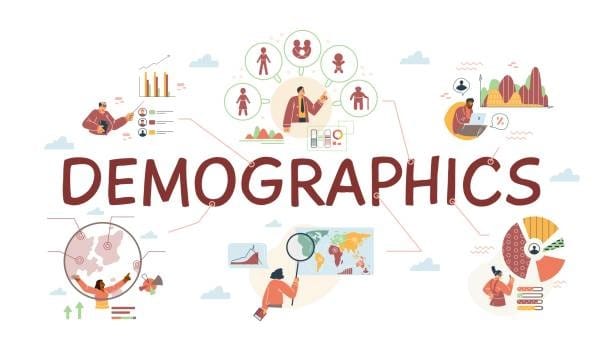
Some years back, we created audiences based on crude assumptions: women aged 25 to 40 interested in yoga. That’s a blunt instrument.
Machine learning algorithms can now be used to predict behavior, but not merely classify profiles. We have shifted to predictive targeting in recent campaigns. AI can analyze historical purchase data to identify users most likely to churn within 30 days or those ready to be upsold.
For example, I was employed by an e-commerce brand that used an AI-based recommendation engine. The system examined dwell time and click patterns rather than displaying the message “those who purchased this also purchased that” (which is rudimentary), and so the homepage hero banner is dynamically updated to welcome back traffic. When the AI identified the user as price-sensitive based on their behavior, it highlighted a sale. If they were quality-oriented, they emphasized specifications.
The jump in the conversion rate was not unnoticed; it was a double-digit increase. That is the strength of processing in a way a human analyst could never do.
Images and Innovation: The Storyboarding Revolution.
I am not a graphic designer. Ask me to sketch something, and you’re getting stick figures.
Image Generative AI has transformed my image briefing process for the creative teams. I do not need a general email; I want a futuristic city with a neon feel, but make it look environmentally sound so I can use the tool to create a mood board or mockup.
I can take these created images to my real human design team and say, “This is the vibe.” Now make it on-brand, adjust the lighting, and make it professional. It helps bridge the communication gap between the creative execution and marketing strategy sides.
Moreover, when small social media assets need to be created, such as an A/B test background texture or a simple variation, AI is a lifesaver. Testing 50 ad creative variants takes the same amount of time as testing five creative variants previously.
SEO: The Semantic Search Shift.
SEO no longer involves keyword stuffing. Search engines are evolving into answer engines.
I use AI to support semantic analysis. When ranking enterprise accounting software, I do not rely solely on search volume. I generate AI tools to analyze the top 10 ranking pages and inform me:
- What are the questions they are responding to?
- What are the sub-topics that they lack?
- What is the reading level?
This helps generate information that will really contribute to the internet, rather than merely imitating existing content. Also, the machine learning is excellent on the tedious technical side: creating schema markup, adding alt text to images, and running broken link audits.
The Ethical Guardrails (and Where They Go Wrong)
We should discuss the dangers, as they exist.
1. Hallucinations: AI is lying down with complete confidence. I once requested a tool to retrieve statistics on mobile usage in 2023, and it generated a study from a well-known company that did not exist. Rule #1: Fact-check everything. Your brand authority (and EEAT) will be gone if you post content with false data.
2. Copyright and Ownership The legal situation on AI-generated imagery and copy is unclear. I recommend that clients avoid using raw AI-generated output on trademarked assets (such as logos). Use it for short-lived social content or brainstorming, but retain all of your core brand property as something humans create and is legally protected.
3. Uncanny Valley of Brands Vocality: When you robotize your customer service responses or completely automate your email newsletter, it will touch your audience. There is a certain robot cadence that puts people off. The automation must reach the point where the feeling starts. When a customer is angry, they need a human being, not a chatbot optimization script.
The Future is Hybrid
The marketing professionals who will become unemployed are not the ones competing with AI; they are those who will not adopt AI, who will be replaced by those who will.
My workflow is currently estimated at 40 AI-assisted and 60 human-based executions. This ratio will enable me to spend less time on spreadsheets and syntax and more time on strategy, creative direction, and understanding the human psychology behind the click.
Digital marketing via AI is not about cutting corners. It is about stripping away the junk to get down to the business you were brought in to do: connecting people.
Frequently Asked Questions
Q: Does Google punish my text as long as I have written it through AI?
A: Google officially claims that they reward high-quality content, but leaves the method of its production to itself. But when you generate low-quality and unedited AI spam to achieve rankings, you will be punished. Emphasize value and human editing.
Q: Is AI marketing costly to small businesses?
A: Not necessarily. Many features require significant power and are built into tools you likely already use (such as Mailchimp, Canva, or HubSpot). Individual subscriptions to text- or image-generation services are typically cheaper than hiring an additional employee.
Q: Does AI mean I can lose my social media manager?
A: No. AI can plan posts, generate caption ideas, and analyze the optimal posting time. Still, it lacks the community engagement, PR crisis, and real-time cultural trends that a human being has.
Q: Why is the issue connected to how I ensure that I keep my brand voice when using AI?
A: You must “train” the AI. It is a good idea not only to request a post but also to include your brand guidelines, examples of successful past posts, and tone guidelines (e.g., witty but professional). Always edit the final output.
Q: How should the use of AI in marketing begin?
A: Start small. Select one of the repetitive processes- such as typing the subject lines of e-mails, transcribing a video conference, or creating a blog outline- and identify a tool to help with that. Get used to that workflow, then attempt to change your entire strategy.