

Digital marketing personalization used to mean little more than inserting a first name into an email subject line. AI has changed that considerably — not just as a new marketing channel, but as a genuine shift in how marketing work itself gets done, from content strategy through to targeting and creative production.
This guide covers how to use AI for digital marketing without losing what makes a brand distinct — it isn’t about fully automating a marketing department — that’s not a realistic or advisable goal. It’s a practical look at how AI actually fits into a digital marketing workflow to cut down on repetitive work, sharpen strategy, and improve ROI, while keeping a brand’s actual voice intact.
The Blank Page Cure: AI-Driven Content Strategy
It’s worth addressing directly: some marketers do generate entire 2,000-word articles with AI and publish them with minimal editing. It’s usually easy to spot — flat, generic, and lacking a clear point of view, which tends to underperform regardless of how well-optimized it looks on paper.
Where AI genuinely earns its place is in the ideation and outlining phase. For a content calendar covering a dry, technical subject — enterprise supply chain logistics, for example — AI works well as a sparring partner: feeding it a sales call transcript or customer interview and asking for a set of blog post titles addressing the specific pain points raised often surfaces angles that wouldn’t have come up otherwise.
From there, AI-generated outlines can cut research time significantly, with a human writer still handling the actual drafting, adding real examples, and verifying every fact. This Human-AI-Human structure — human direction, AI-assisted drafting, human review — tends to maintain quality while genuinely increasing output speed.
Beyond Demographics: Predictive Analytics and Segmentation
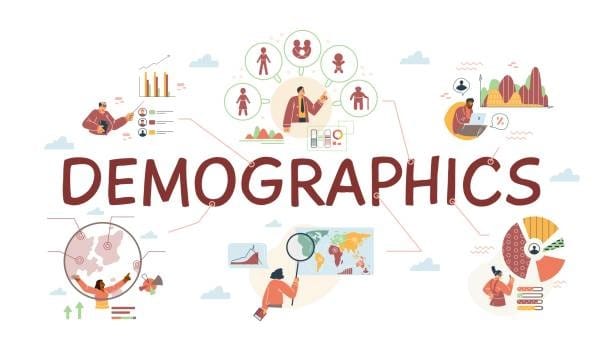
Traditional audience segmentation relied on fairly blunt demographic assumptions — “women aged 25–40 interested in yoga,” for example — which captures only a rough approximation of actual buying behavior.
Machine learning models can now predict behavior rather than just classify static profiles. Predictive targeting analyzes historical purchase data to identify which users are likely to churn within a given window, or which are ready for an upsell, well before those patterns would be obvious to a human analyst reviewing spreadsheets manually.
A practical example: an e-commerce recommendation engine that goes beyond basic “customers who bought this also bought that” logic by analyzing dwell time and click patterns to dynamically adjust a homepage — highlighting a sale for price-sensitive visitors, or emphasizing detailed specifications for visitors showing quality-focused browsing behavior. This kind of dynamic, behavior-based personalization consistently outperforms static, demographic-only targeting in conversion rate — the kind of pattern-matching at scale that would be genuinely impractical for a human analyst to replicate manually.
Images and Creative: The Storyboarding Shift
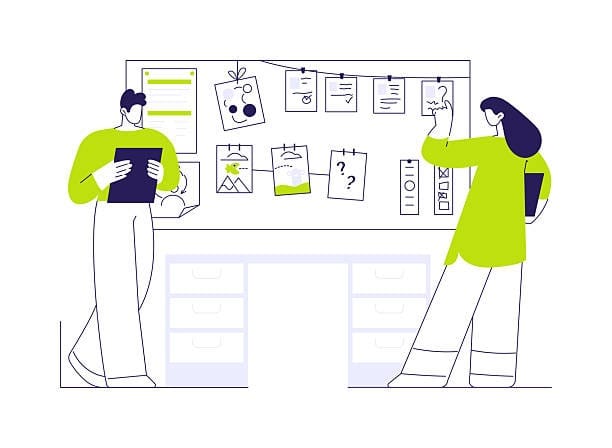
AI image generation has changed how creative briefs get communicated to design teams. Rather than describing a visual concept purely in words — “a futuristic city with a neon feel, but environmentally conscious” — generating an actual mood board or rough mockup gives a design team something concrete to react to and refine, rather than trying to interpret an abstract written brief. This closes a real communication gap between marketing strategy and creative execution.
For smaller, high-volume assets — A/B test background variations or minor creative tweaks — AI-generated imagery is a significant time-saver. Testing a large batch of ad creative variants now takes roughly the same effort that testing a handful used to require.
SEO: The Shift Toward Semantic Search
SEO has moved well past keyword density and toward search engines functioning increasingly as answer engines rather than simple keyword matchers.
AI tools are useful here for semantic analysis beyond raw search volume — for a competitive topic like enterprise accounting software, AI can analyze the current top-ranking pages and surface useful patterns:
- What specific questions are the top-ranking pages actually answering?
- What subtopics are consistently missing across those pages?
- What reading level and tone are they written at?
This kind of analysis helps produce content that genuinely fills a gap rather than simply echoing what’s already ranking. AI is also well suited to the more tedious technical side of SEO — generating schema markup, drafting image alt text, and running broken-link audits — work that’s necessary but doesn’t require much creative judgment.
Ethical Guardrails (and Where They Go Wrong)
The risks here are real and worth addressing directly.
1. Hallucinations: AI can state false information with complete confidence — including inventing a plausible-sounding study or statistic that doesn’t actually exist. Fact-checking every AI-generated claim before publishing isn’t optional; publishing fabricated data is a direct threat to brand credibility and E-E-A-T signals.
2. Copyright and ownership: The legal landscape around AI-generated imagery and copy remains genuinely unsettled. A reasonably safe approach is avoiding raw AI output on core trademarked assets, such as logos, reserving AI for short-lived social content or early-stage brainstorming, while keeping core brand assets human-created and clearly protected.
3. The uncanny valley of brand voice: Fully automating customer service responses or an entire email newsletter tends to produce a subtle but noticeable robotic cadence that puts audiences off. There’s a clear line where automation should stop and genuine human response should begin — an upset customer needs an actual person, not an optimized chatbot script.
The Future Is Hybrid
The marketers most at risk aren’t the ones who fail to outcompete AI directly — they’re the ones who decline to adopt it while competitors do.
A workflow that blends AI-assisted execution with human-led strategy tends to free up meaningful time from repetitive, mechanical tasks — spreadsheets, first-draft copy, routine analysis — for the work that actually requires judgment: strategy, creative direction, and understanding the psychology behind why someone actually clicks.
Using AI for digital marketing well isn’t about cutting corners — it’s about clearing away repetitive work to spend more time on the part of marketing that’s actually about connecting with people.
Frequently Asked Questions
Does Google penalize content just because it was written with AI?
No — Google has stated it rewards high-quality content regardless of how it was produced, but does penalize low-quality, unedited AI content published purely to manipulate rankings. Focus on genuine value and thorough human editing.
Is AI marketing expensive for small businesses?
Not necessarily. Many useful AI features are already built into tools businesses likely already use, such as Mailchimp, Canva, or HubSpot. Standalone AI subscriptions for text or image generation are typically far cheaper than hiring additional staff.
Does AI mean I no longer need a social media manager?
No. AI can help plan posts, generate caption ideas, and identify optimal posting times, but it still lacks the community judgment, crisis response, and real-time cultural awareness a human social media manager brings.
How do I keep my brand voice consistent when using AI?
AI needs to be “trained” with context — providing brand guidelines, examples of past successful content, and specific tone descriptors (witty but professional, for example) rather than a bare request. Editing the final output by hand remains essential regardless of how detailed the prompt is.
How should I start using AI in marketing?
Start with a single repetitive task — writing email subject lines, transcribing meetings, or drafting blog outlines — and find one tool suited to it. Building comfort with that one workflow before expanding to a broader strategy is a more sustainable approach than trying to overhaul everything at once.
Related Reading
- How to Use AI for Online Business
- How to Generate Passive Income Using AI
- How to Generate Captions Using AI